 There is a beautiful safety in books. In that time, when you are in a great novel, your focus is clear, and reality can gracefully slips away, leaving you to play in the imagination of the author. You walk with the characters, you explore the land, you fall in (and out of) love, and when the book is closed, a bit of you feels lost, returning to the too real world.
The sad thing is that when you return to a book again it is never the same. That initial spark is diminished. This is because the surprises are gone, and with each additional reading it slips more and more; until it is nothing more than words on paper, something to be almost merely analyzed. It is a memory now, a glimmer of that first magical escape.
The fact is I understand the desire to create fan fiction. As a lover of books and an author, I truly do.
It’s hard to let go, move on, especially if you want more than what the author wanted to give to you. It can feel like an early death, especially when there is so much more to live. And maybe it is that book, that author, that inspired you to write yourself! Your inspiration driven from a need for more and more.
The problem is at the heart of every piece of fan fiction there is one bit of truth, one thing the fan fiction author doesn’t want to consider:
It is not their decision whether the story continues or not.
They are not the author and only the original author should make that call.
Can I borrow this?
Because of the internet, fan fiction has moved from being something someone does privately in journals without another’s knowledge to something widespread. There are websites everywhere for it! And while many of the sites will claim they don’t make a dime from the work (especially if the author is still alive), it doesn’t change the fact that they are still playing in another’s backyard… without the owner of the house’s permission.
“Hey kids! Get off my lawn!”
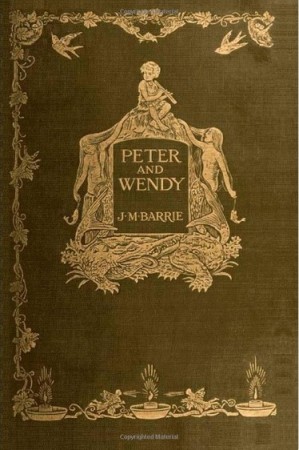 Copyright laws around the world are not universally the same. Some countries are passionate about keeping the copyright on a work, letting it span generations of family members; while others (like the US), allow the copyrights to expire. It is when they expire here that all bets are then off. Sometimes laws can clash over the same book in different countries. A great example of this is Peter Pan by J.M. Barrie, where the copyright is still believed to be owned by the Great Ormand Street Hospital (there is still some debate around it), yet here in our country we consider the copyright expired, allowing sequels and other uses of the characters (Hello Tinkerbell movies, Peter Pan and the Starcatchers, and Jake and the Neverland Pirates).
The first time I heard of fan fiction and its popularity was when Harry Potter was at the height of its popularity. I was quite the Potterhead at that time, even following the great podcast Pottercast. Why do I bring this up? Well, there was one eye-opening interview on that show that summed up for me one of the big challenges with fan fiction. This happened before the last Potter book was released and a fan fiction author was on the show and she was terrified.
Utterly terrified.
See, this fan fiction author created her own last Harry Potter book and put it on a fan fiction site. Well, it started getting shared around by people claiming it was the actual last book in the series. It was growing in popularity and this poor young author was scared she was going to be tracked down and sued. Her appearance on the show was because she wanted everyone—everyone!—who downloaded and read her book to know that it was not real. She said over and over again that she didn’t want to get in trouble.
And you see, with that story, the fine line you walk if you decide to attempt fan fiction and share it with the world. Frankly, this stuff doesn’t belong to you.
Can’t it help me learn to write?
Another trend I have begun to see is that some teachers will use fan fiction as a way to teach creative writing. I’ve read the arguments on how some believe this may stir creativity, gently teaches someone what it takes to write a book (from inspiration to plotting to creation), as compared to just pushing them into the literary deep end of the pool. But I find that debatable.
Yes, Joseph Campbell and others will argue that all books come from a place of familiarity (the hero’s journey, etc.), but it is one thing to be influenced it is another to take someone’s characters and worlds.
Of course, one of the things these teachers and writers hesitate to admit is that it is an impossible task, and the new work will always be wanting. The writers know it, the readers know it, and even the teachers know it.
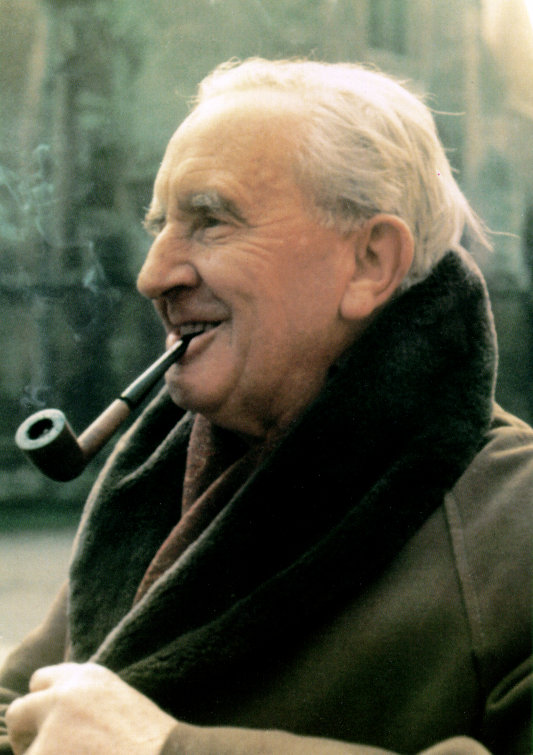 Consider- We are all unique, not just in our DNA makeup, but in the experiences we have that make up who we are. J.R.R. Tolkien wrote The Lord of the Rings, and the trials he had over World War I and in studying literature influenced that epic. To be more precise, his study of literature influenced his use of languages (and those he made up), and the friends he lost during the war influenced his characters and their relationships.
Honestly, my fellow writers, you will get a lot more out of getting into the real world and collecting your own experiences (which includes reading a lot of different kinds of books). And the last thing any creative writing teacher should be telling their students is to copy another’s voice; they should be focusing on helping their students to find their own.
But I love this story!
Anyone that decides to write fan fiction is a lover of books.
They have dreams of being an author and they are inspired by a tale. A good percentage of them do it purely out of love with little thought of financial return.
Yes, many published fan fiction authors will point out that they are not trying to take money away from the author (especially if the author is long dead); or if they are alive, they just put it out there for free. They just want to share their work, share their love of the stories. So, in their perception, the birth of their continuing story is from a place of love. A conception over a literary honeymoon, if you will.
“Don’t they see we love them too?”
Whatever, the case, it doesn’t change the fact that they are attempting to do something that the original creator didn’t intend. They are assuming since they have such love for the creation and they are inspired that it justifies the work. They are like the teenager with the first love, blind to the actual situation around them.
Take a deep breath.
Sometimes things are just not meant to be.
The forgotten party
Writing is one of the most private artforms.
The entire experience begins in one’s head, maybe in a dream or in a stray thought… and then grows and grows… nurtured over time, until the author has in front of them a book that makes them proud. Beginning in such a personal matter, it is hard for an author not to feel strongly and passionately for their creation. It is more than about the money or the ownership, it is like a child.
So it is easy to imagine how an author might feel violated to suddenly have their work “taken over” by another. And authors ranging from Anne Rice to George R.R. Martin to J.K. Rowling have voiced their discomfort with the practice.
Yes, fan fiction writers are driven by their passion for a creation, but many times they are failing to see it from the author’s perspective, the very authors who created the work they love. And no matter how great that idea is the fan fiction writer has, it is a dream, a fantasy. Nothing more than a “what if.” Possibly even something that the original author already considered and decided against.
For those fan fiction authors, my advice is to pause before diving into the creation of one. Maybe that idea you have that is spurring your desire can grow if you give it a chance, become something new. Maybe, in time, it could become your own story with new characters and new settings… and who knows? Maybe someday you will inspire another writer.
Hopefully, they will stay in their own backyard.
–
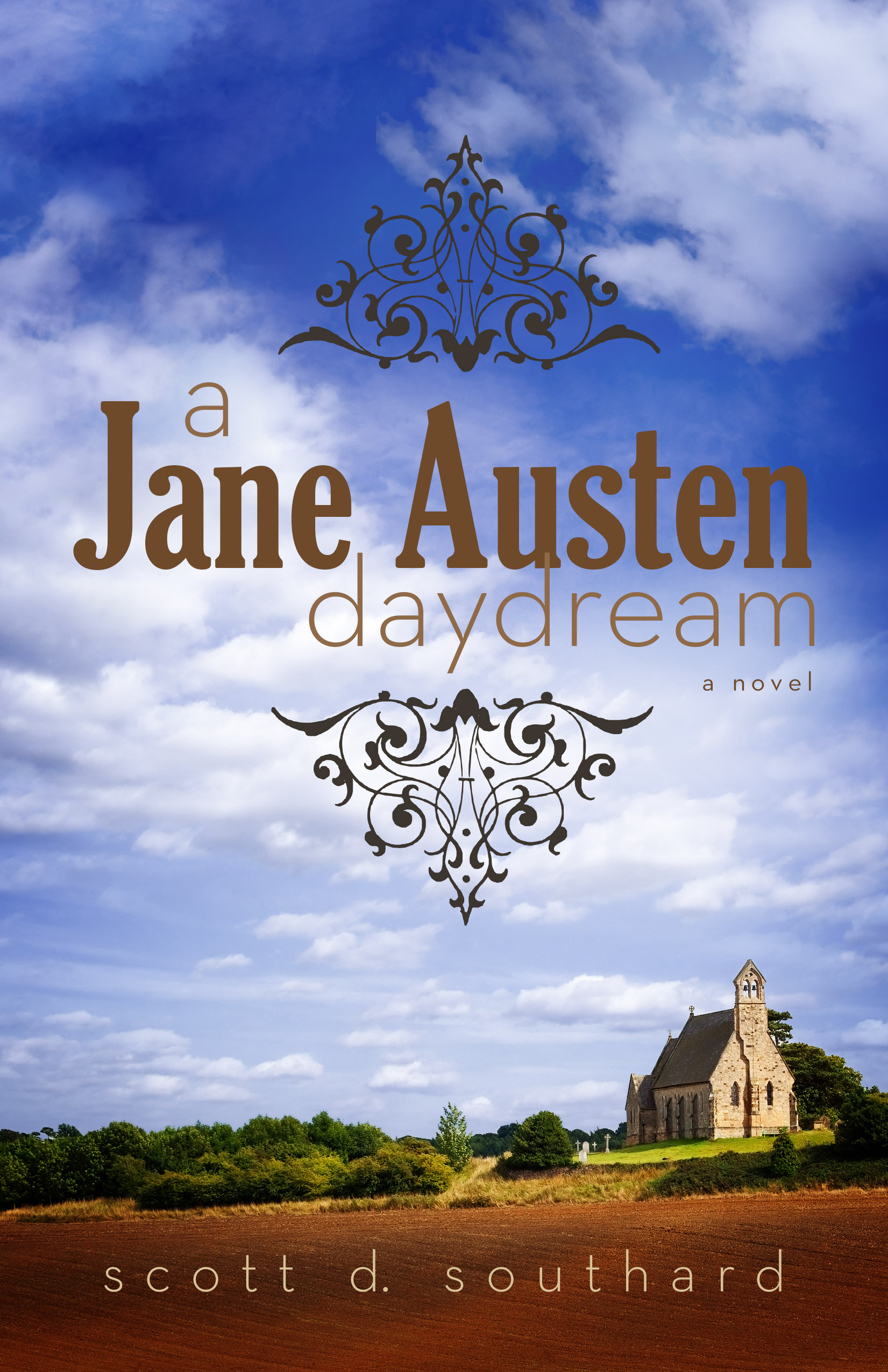 If you liked reading this post, why not check out one of my books? I’ve had four novels published in the last few years, A Jane Austen Daydream, Maximilian Standforth and the Case of the Dangerous Dare, My Problem With Doors and Megan. You can find them via my amazon.com author page here, or as an eBook on Google eBooks here. Thanks for reading!
–
Need an editor? Dream of finishing that book but need some help? Learn about my editing services by visiting this page on my site. Or you can contact Rebecca T. Dickson and request to work with me by clicking the image below.


 The Stories of Scott D. Southard
Leave a comment