 I need to begin with Diane Rehm.
See, one of my little obsessions is The Diane Rehm Show and I listen to her about four to five hours a week. I even get the podcast, and when I am helping one of my children to fall asleep, usually I am listening to her take a caller on my phone’s headphones. And, to let you in on a secret, when I play “interview” in my mind she or Terry Gross are the ones asking the questions. I’m not the only person who does this, right? You are out someplace and suddenly an interview forms in your head. Before you know it, you are saying aloud: “Well, Diane, when I first came up with the idea…”
Okay, that might have been too much information. Moving on!
Anyway, a few years ago she had on a popular writer. I can’t remember who the author was, but this author’s ego was proudly on the march. You would’ve thought she had written the next Ulysses and to add to the size of her enlarging head a caller called her, praised her, talked about how much she loves her books and then asked her what her advice would be for a new writer.
The author replied that the golden rule of writing is “Write what you know.” She then went on to explain why this rule is so important and as I began to roll my eyes and prepared to finally turn off the episode, Diane did something utterly amazing.
The grand Mrs. Rehm interrupted the author and debated the author on that rule. She asked how could that be true. JK Rowling, for example, doesn’t know any wizards and has never been to Hogwarts or have magic (Yes, Diane referenced Harry Potter!). If Rowling only wrote what she knew we wouldn’t have that wonderful series, Diane argued.
If I was in the studio that day I would have given her a hug and a kiss.
–
Webster’s Dictionary defines fiction as:
Something invented by the imagination or feigned; specifically: an invented story.
Okay, that was really lame. I know that. It was like a 13-year old’s science report, but hear me out. If that is the definition of what fiction is why do so many start from a place where they write only what they know? Why is that considered healthy for a new writing mind, and why, honestly, is it considered fiction?
I blame writing teachers. That may sound mean, but educators like to help their students succeed (understandable); and also in the world of higher education, the more students studying in your field the more money coming into your department. If a writer comes in dreaming of being an author, the last thing you want to do is turn them away because they lack enough creativity. No, you are going to fight tooth and nail to keep them in the program, because that is one more body on your team. Save the hard truths for when they get out of school and are not paying the fees!
The problem is though when you step back, if you are simply creating a story out of elements you have experienced, things that you know, maybe even basing it on people you know (or yourself), that is not fiction. It is some weird hybrid fiction non-fiction.
And writing what you know is so gosh-darn easier than coming up with something outside of the box. It’s too easy! It is like figuring out a code in a video game so you can skip a difficult mission. Where’s the fun and challenge in that?
–
It’s funny how many take this rule very personally. I am expecting comments and Twitter responses offended by me taking this rule on; they will be offended that I even dared to say it hurts the artform of fiction writing (Yup, I just wrote that).
How could they not be offended though?
I mean, if you are writing what you know, I am attacking in a way… well… you. Because your story is more than just a story, it is an extension of you, your experiences. And, honestly, your story shouldn’t feel that close. Yes, I may be the first to call my novels children, and a bad review may make me stamp my foot and count to ten, but it is not like someone insulting me personally. It is different. There should be some healthy disconnect there.
Here are three reasons why I think this rule should be thrown away.
1. It Limits Your Characters
I am a dude.
But I have also written three novels where the main character was a woman. Two of my novels were very much in the female mind. Let me give you an example fresh off the presses…
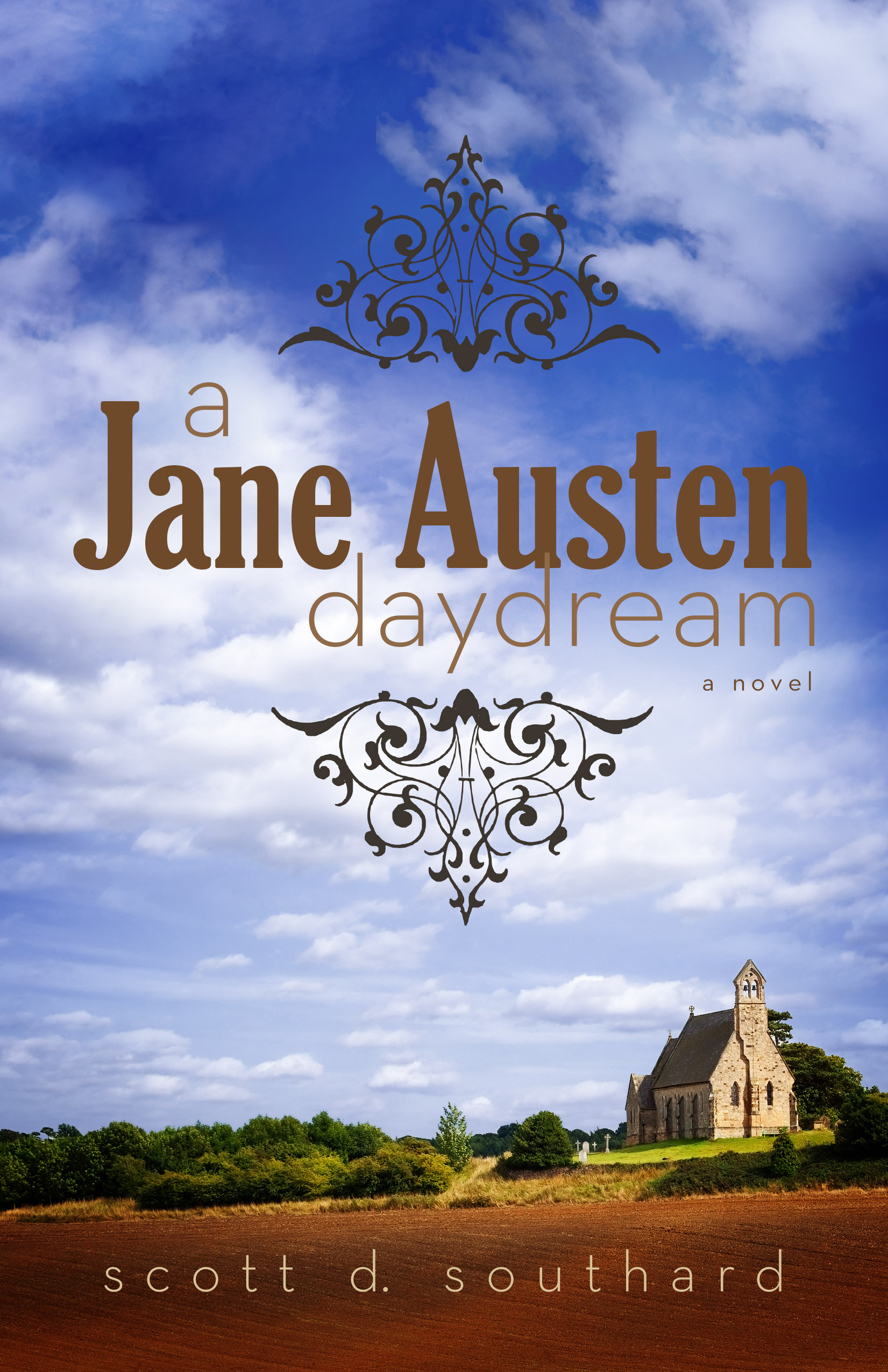 My new novel A Jane Austen Daydream is my attempt to re-imagine a new life for Jane Austen, putting her in an adventure that mirrors one of her books as compared to the facts of her life. It is a very creative endeavor with some really unique and new literary twists in it, including one I am certain has not been attempted in a novel before.
Now if I was living by the rule of write what you know, I would never have considered taking on a different gender, let alone putting myself in one of the greatest literary minds ever.
This is not what I know! Yet, I did and I feel better for it.
2. It Limits Your Imagination
If you have been taught that the first rule is to write what you know, you are not first going to your dreams, daydreams, and imagination for ideas; instead you are looking around your reality. You are thinking of your friends’ experiences, maybe your own.
This rule is like the gateway drug and like a druggie with a problem, you might be ransacking people’s lives trying to find something to pay for that next hit. There is no better way to ruin a relationship than by putting someone you know in one of your works.
If you want to do something truly new in fiction, something unexpected, you need to abandon this rule.
When I look through my library of my other completed books from time travel adventures (My Problem With Doors) to twisted genre-breaking mysteries (Maximilian Standforth and the Case of Dangerous Dare) to a book about a fantastical superhero princess (Megan), I am glad I never limited myself to what I know. Yes, they are fun books, but also serious and literary as well. And if I had only prescribed to writing what I know, these ideas wouldn’t even have left the starting block.
3. It Limits Your Perception of Reality
Most of us live small lives. That is not a criticism, but a fact. Yes, we may travel some, but we don’t each have thousands of friends (no matter what Facebook or Twitter tell us) and really we will only live in a few different places in our lives. We don’t have enough years on this planet to experience everything. It is impossible.
So if you only are surrounded by the same group of people, the same community, the same everything, how can you be expected to see the world from another perspective? To break through this wall, you can’t write what you know, but go out and research, experience something different. Yes, that would make it something you know—I’m going to say it before someone points it out in the comments—but you wouldn’t have even considered this if you were following the rule correctly. (Ha!)
–
I’ve said this before in my writing posts and I will say it again, but creating a novel should be the most difficult thing you do. This should be true if it is your first or your twentieth. This is an artform, a skill and to do it right, it takes hard work.
Also, I can’t sing. That may sound out of the blue, but hear me out. I also can’t paint or dance or play the piano, but I can write. There is a certain piece of luck that comes with being a fiction writer like with any art form. It’s about the roll of the dice, some get snake eyes, some don’t. And just like the ability to sing in tune (again, I can’t do it), part of it just comes down to how we are each wired at the start of this experiment called life.
I am imagining again the protests. But the rule helps people learn, practice! Well, to them I have a better golden rule. One that should replace the misstep of writing what you know.
Read Everything and Experience Life
Your brain is a muscle and like a muscle learns and builds strength, your mind does as well. Reading everything you can get your hands on and getting out into the world, seeing new things, will build up the resources needed to come up with ideas and think outside the box of your reality.
Honestly, writing what you know is like a painter starting with a canvas with paint-by-numbers on it. That will never end up in a museum.
–
 If you liked reading my article, why not check out some of my published books? I’ve had four novels published in the last few years, the new A Jane Austen Daydream, Maximilian Standforth and the Case of the Dangerous Dare, My Problem With Doors and Megan. You can find them via my amazon.com author page here, or Doors and Megan as an eBook on Google eBooks here. Thanks for reading!
–
–
Need an editor? Dream of finishing that book but need some help? Learn about my editing services by visiting this page on my site. Or you can contact Rebecca T. Dickson and request to work with me by clicking the image below.



 The Stories of Scott D. Southard
Leave a comment