Skip to content

The Stories of Scott D. Southard

  • In Jerry’s Corner
  • A Jane Austen Daydream
  • Permanent Spring Showers
  • Megan
  • Maximilian Standforth and the Case of the Dangerous Dare
  • The Dante 3
  • Me Stuff
  • Man Behind the Curtain
  • February 13, 2012

    Talking About Some Deaths in Literature

    Death is kind of on my mind a lot recently. My grandfather (who I wrote about here), died on February 9 and the loss of him and how it has impacted my every day thoughts had really made me think about death in relation to a lot of things around me. In my author-esq head, it’s not surprising that literature found its way into the mental ramblings (or should we just be honest and call them distractions from reality?).

    It seems many times we don’t take “dead” very seriously in literature. Unless it is gruesome (Hi, George R.R. Martin!), or the other characters are seriously changed because of it for the worse (Seriously, why did Little Nell have to snuff it?), many times it seems to float past us as a plot device. Is it because we have a long history of people returning to life in books so it doesn’t feel as final? (Aslan, Gandalf, every comic book character, and most religious stories, etc.) The corpse is rarely there in a story, unless it has just happened; that could be part of it as well.

    Death in writing is a plot device. It is a tool both sharp as a knife and as a blunt as a sledgehammer.  We cheer when bad guys die. We look at a death sacrifice as heroic, not thinking of the final end that just happened to a character.

    Is it simply because we don’t see characters as “human?” So maybe it is more a fault of us writers that a readers feels, or doesn’t feel, the loss. There might be something to it. I wrote a book, MEGAN, that is built around a death and I tried to show a character from being told of the death of another with all the initial stages of acceptance over the course of a day. Hmmm… Probably why the work isn’t as popular on amazon.com than my time-traveling adventure, My Problem With Doors. So clearly, death is not a selling point.

    There is a lesson there  I learned that you will not need to now. You can thank me later.
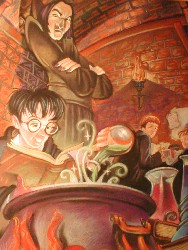
    Sometimes a death can slip right by, almost as an afterthought. My favorite example of this is the first Harry Potter book. One thing I love to point out to people is that Harry Potter begins with a double homicide. Yes, we see the scene later in the series (We get a little description in the first book, just a taste). And while JK Rowling does her best to take a light approach to that first chapter (Vernon in all his heavy-set foolishness), it doesn’t change the fact the story really started the evening before when Voldemort went into the home of the Potters and slaughtered them gleefully. (more…)
    Share this:

    • Email a link to a friend (Opens in new window) Email
    • Share on X (Opens in new window) X
    • Share on Facebook (Opens in new window) Facebook
    • Share on WhatsApp (Opens in new window) WhatsApp
    • Share on Pinterest (Opens in new window) Pinterest
    • Share on Reddit (Opens in new window) Reddit
    • Print (Opens in new window) Print
    • Share on LinkedIn (Opens in new window) LinkedIn
    • Share on Tumblr (Opens in new window) Tumblr
    Like Loading…
  • February 8, 2012

    Me, Myself, & Charles Dickens

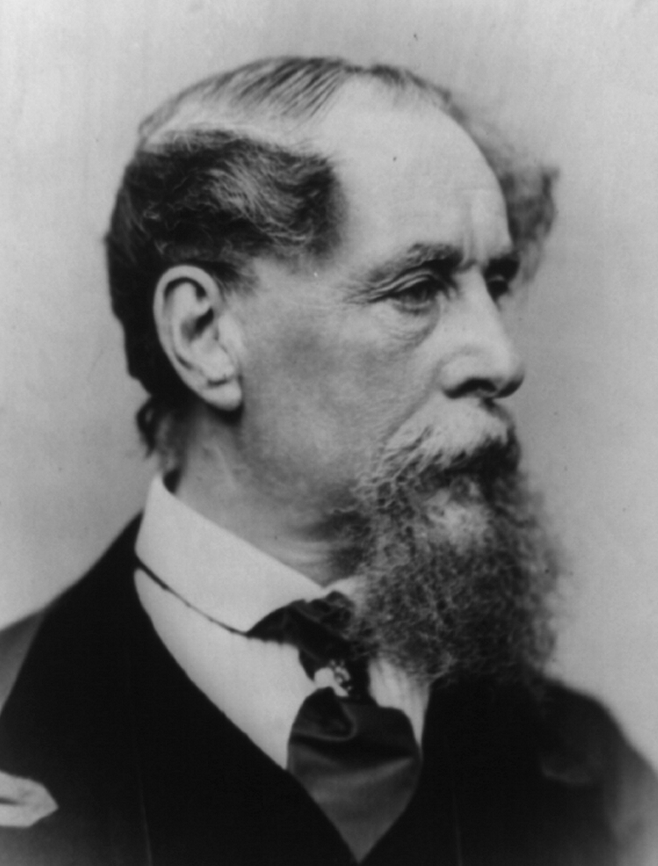
    I’ve always felt a personal connection to Charles Dickens.

    For example, I only have a few authors hanging on my walls at home, but he is one of them, right next to Mark Twain (Who, strangely, a lot of visitors think is Albert Einstein… Yes, I secretly judge the people who do that each and every time).

    Right from the beginning of my exploration into books, I knew his name. When I was six or so, I remember getting a series of “comic” book adaptations of classic literature. I’m sure you remember these books. Opening any page, on one side would be heavily simplified and edited narrative and on the other will be a black-and-white drawing of what is happening. While as an adult I question whether we should be ruining the surprises and endings of great works of literature for kids in books like that, at the time, I couldn’t get enough of them.

    Well, I had dozens of these books when I was a kid and most of them were attributed to Charles Dickens. These books were how I first experienced the madness of Miss Havisham and the “pointed” end of Sydney Carton. (more…)

    Share this:

    • Email a link to a friend (Opens in new window) Email
    • Share on X (Opens in new window) X
    • Share on Facebook (Opens in new window) Facebook
    • Share on WhatsApp (Opens in new window) WhatsApp
    • Share on Pinterest (Opens in new window) Pinterest
    • Share on Reddit (Opens in new window) Reddit
    • Print (Opens in new window) Print
    • Share on LinkedIn (Opens in new window) LinkedIn
    • Share on Tumblr (Opens in new window) Tumblr
    Like Loading…
  • February 6, 2012

    Writer’s Corner: Four Projects I Would Love to Adapt for the Silver Screen…

    A few days ago I went through some of my old writing files on my computer seeing what jumps out at me and what inspires me today; and, for some unexplained reason, my mind began to think about film adaptations.

    There is a great public misnomer about film adaptations. When you hear people talk about films adapted from books or plays, the audience seems to think that the screenplay writer had a choice in making changes for the big screen. “Why couldn’t he have just filmed the book?” You would hear that complaint a lot around the Harry Potter films in podcasts and forums, for example.

    The fact is film is a different medium than books, and with it comes its own limitations and strengths. While the borders on a book are only limited by the imagination of the reader (and writer), a film has to be focused on one point at a time, understanding that there is only so much space on the screen at any given moment. Length, pacing, and audience need to be considered (You can’t have things happen “off screen” in a movie, for example; the audience will think it didn’t happen if they didn’t see it).

    The greatest difference between film and books, is that a film has got to “earn” your attention for every minute. It is harder for a film to “suspend disbelief.” Which means a story, while in a book can be stretched out, in a film there has to be action. In other words, there must always be movement; it’s how they keep our eyes on the screen and our hands out of the popcorn bowl. (more…)

    Share this:

    • Email a link to a friend (Opens in new window) Email
    • Share on X (Opens in new window) X
    • Share on Facebook (Opens in new window) Facebook
    • Share on WhatsApp (Opens in new window) WhatsApp
    • Share on Pinterest (Opens in new window) Pinterest
    • Share on Reddit (Opens in new window) Reddit
    • Print (Opens in new window) Print
    • Share on LinkedIn (Opens in new window) LinkedIn
    • Share on Tumblr (Opens in new window) Tumblr
    Like Loading…
  • January 23, 2012

    If the election is a story…

    As children we are raised to think of our history as a story.

    I’m not sure when this way of teaching American history began, but it was definitely prevalent throughout my education. Textbooks would present events, not as simple linear moments but as stories with beginnings, middles, and endings; each with their own book or chapter.

    Consider, for example, how we look at the Civil War: The Civil War has a beginning with the election of Lincoln and Fort Sumter; a middle with Gettysburg; and an ending with Lincoln’s assassination. Everything else that occurs is seen in the context of that storyline. You can do this same trick with other wars and major events and you will see how it has affected your view on history as well. We all do it, we were taught to do this; we probably just didn’t realize it at the time that is what was going on. (more…)

    Share this:

    • Email a link to a friend (Opens in new window) Email
    • Share on X (Opens in new window) X
    • Share on Facebook (Opens in new window) Facebook
    • Share on WhatsApp (Opens in new window) WhatsApp
    • Share on Pinterest (Opens in new window) Pinterest
    • Share on Reddit (Opens in new window) Reddit
    • Print (Opens in new window) Print
    • Share on LinkedIn (Opens in new window) LinkedIn
    • Share on Tumblr (Opens in new window) Tumblr
    Like Loading…
Previous Page

Create a free website or blog at WordPress.com.

Privacy & Cookies: This site uses cookies. By continuing to use this website, you agree to their use.
To find out more, including how to control cookies, see here: Cookie Policy

Loading Comments...

    • Subscribe Subscribed
      • The Stories of Scott D. Southard
      • Join 1,946 other subscribers
      • Already have a WordPress.com account? Log in now.
      • The Stories of Scott D. Southard
      • Subscribe Subscribed
      • Sign up
      • Log in
      • Report this content
      • View site in Reader
      • Manage subscriptions
      • Collapse this bar
    %d